Everything You Need to Know Before Buying a TIG Welder
Key Takeaways
- What is TIG welding?
- Choosing the TIG welder: Buying Guide
- Type of Material and Polarity
- Input Voltage and Electrical Supply
- Cooling System
- User-Friendly Interface
- Portability
- Warranty
- Budget considerations
- Safety Precautions
- Conclusion
If you are planning on purchasing a TIG welder but are unsure of which model and features to choose, then you have come to the right place. In this blog, we will discuss the key factors to consider while buying a TIG welder.
What is TIG welding?
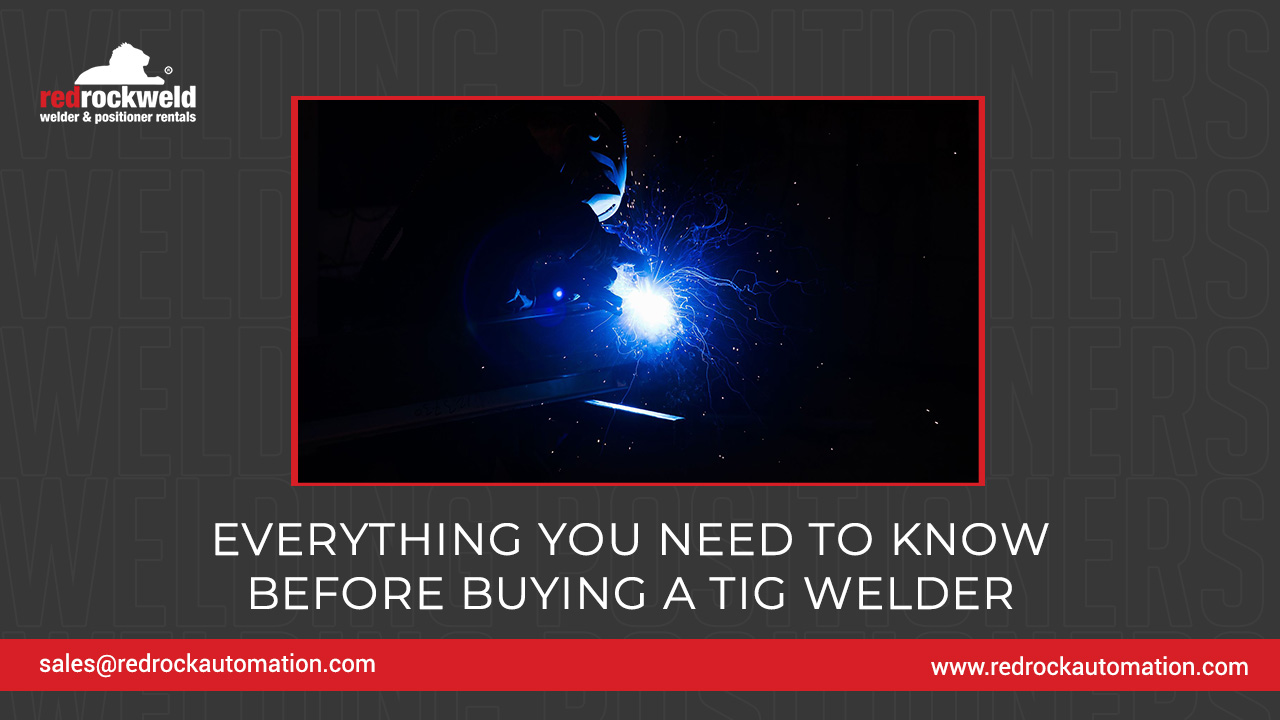
Before delving into the buying guide, understanding the welding process is crucial. TIG welding/Tungsten Inert Gas Welding is a welding process that uses non-consumable tungsten electrodes to create strong welds.
The electrode generates an electric arc, melting the workpiece metal, forming the weld pool. Filler metals can be added to reinforce the strength of the weld further. Non-reactive inert shielding gases, usually Argon, are used to protect both the electrode and the welding area from contamination.
TIG welding is widely preferred by the industries for its strong and precise welds and also its excellent compatibility with non-ferrous metals such as aluminum, copper and steel.
Choosing the TIG welder: Buying Guide
1. Type of Material and Polarity
AC/DC and DC-only TIG welders are available, offering flexibility across diverse welding tasks. Therefore, you can conveniently switch between the two current types depending on the material that you are working with.
DC-only machines are ideal for mild steel or stainless steel, while AC/DC TIG welding machines are suited for aluminum and magnesium.
2. Input Voltage and Electrical Supply
Electrical supply is a crucial factor for TIG welders, as it determines the machine you will purchase. For instance, a 110V supply can only run light-duty machines, while a powerful inverter-based three-phase TIG machine will need a 32A connection.
3. Cooling System
The TIG welding machine cooling systems are either air-cooled or water-cooled depending on the job requirement. Air-cooling works for low amperage work, while high amperage ones require water cooling. The cooling system directly affects the machine’s lifespan, so choose them wisely.
4. User-Friendly Interface
Select TIG welders with color screens with clear visual guides, as it will make it easier to set up the welding parameters. The intuitive and user-friendly interfaces will help optimize the welding process.
5. Portability
Portability is yet another factor to consider. If the job requires the operator to move between worksites, a portable TIG welder will be of great use. The light-weight and compact structure will make the whole process a lot easier. So, where and how you plan to use the welding machine is crucial in deciding how portable it needs to be.
6. Warranty
Most welding machines come with a warranty period. It is always ideal to consider a minimum 3-year warranty to ensure long-term reliability and avoid costly repairs in the future.
7. Budget considerations
While the upfront cost of the TIG welder may be high, it will definitely prove to be beneficial in the long run. Investing in good machines is far better than going for cheaper ones, especially if you’re aiming for consistent performance and long-term reliability.
8. Safety Precautions
Safety should never be an after-thought. TIG welding produces bright arcs and fumes, hence industries should invest in welding helmets, heat-resistant gloves and jackets, welding boots and welding fume extractors.
Conclusion
Choosing the right TIG welder shouldn’t be a complicated task. Once you understand the project, workflow, materials and the level of precision the job demands, selecting the right welding machine can be done efficiently. At Redrock Automation, we provide comprehensive solutions designed to address all aspects of the modern welding process.