How Conventional Welding Rotators Improve Welding Efficiency
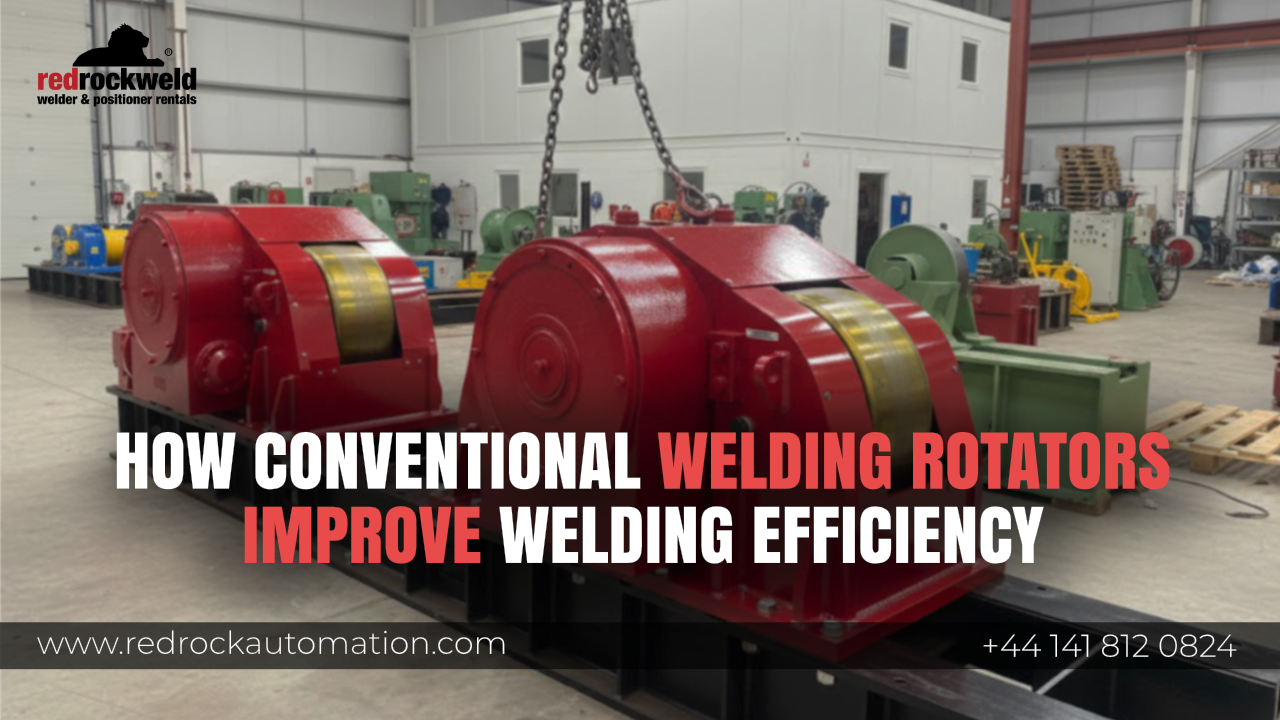
Conventional welding rotators are the foundational machines in the fabrication industry. fabrication of medium to large cylindrical components-especially pipes and vessels. They offer stable support and safe rotation of large cylindrical components-especially pipes and vessels, ensuring precise welding. Given the accuracy and quality of that welding demands, especially in case of cylindrical components, welding rotators become more relevant. In this blog we will discuss the role of conventional rotators in improving the welding efficiency.
What are Conventional Welding Rotators?
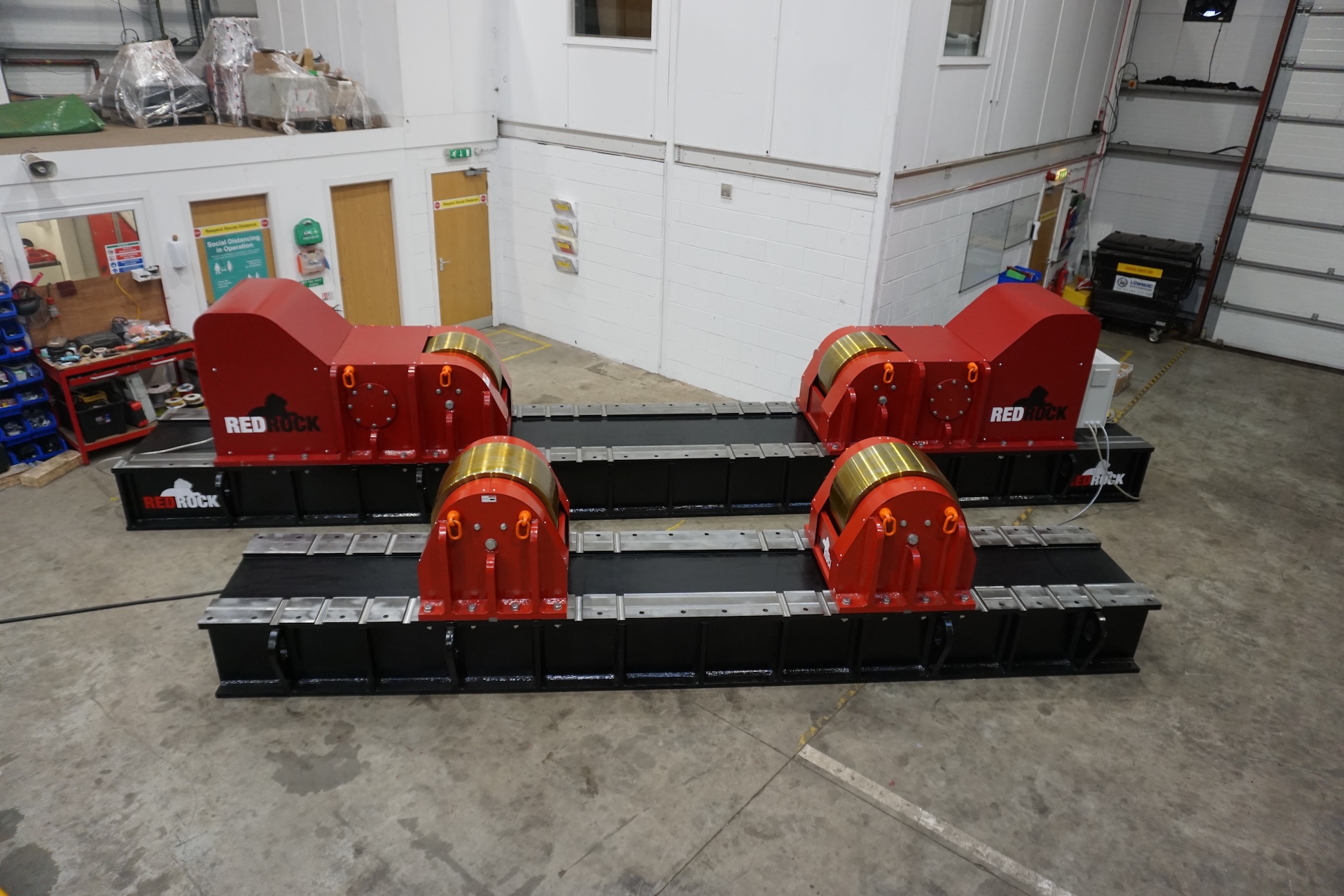
Conventional welding rotators are devices that support and rotate cylindrical workpieces. They consist of two units- a power unit and idler unit. The power units rotate the workpiece, while the idler unit supports the workpiece. The wheels on the carriages can be manually adjusted to match the diameter of the workpiece that is being welded.
Key Advantages of Conventional Welding Rotators
-
Cost efficient
Conventional welding rotators come in a simple design with a basic sturdy steel frame, manually adjustable rollers, a power unit and an idler unit and a control panel that allows the operators to adjust the speed and direction. They have a much lower initial cost compared to the automated counterparts, making them budget friendly.
-
Simpler Operation
There are no complications when it comes to operating the conventional welding rotator. It is user-friendly and hence, the operators can easily learn how to operate them with just basic training.
-
Reliable and Durable
As mentioned earlier, the conventional welding rotators are built robustly, with thick welded steel frames, solid shafts and heavy duty bearings, that makes them durable and stable, providing reliable and consistent operation throughout the welding process.
-
Ease of Maintenance
The intuitive and modular design makes the conventional welding rotators easiest to maintain. They are marked by spare parts availability and simple maintenance routine, making them affordable and practical solutions.
-
Versatility in Production
Conventional welding rotators can be adjusted to match different workpiece diameters; therefore, they are widely used across diverse applications such as welding pipe, tanks and in vessel fabrication.
-
Operator comfort and Safety
Since conventional welding rotators automate the rotation of heavy components, the physical strain and fatigue is reduced, allowing them to work more efficiently.
Conclusion
Given the accuracy and quality that welding demands, especially in the case of cylindrical components, welding rotators are essential equipment in modern fabrication. By automating the rotation of the workpieces, they ensure consistent welding conditions, enhance productivity and improve safety.
It is a smart choice for businesses to invest in conventional welding rotators to maximize productivity and maintain weld quality. At Redrock Automation, we offer high-quality conventional welding rotators for hire that are durable, built sturdy with enhanced operational efficiency, delivering unmatching results across diverse industries.