How Welding Tractors Improve Efficiency in Pipeline and Heavy Fabrication Projects
Key Takeaways
- Benefits of Welding Tractors
- Enhanced Efficiency
- Maintain Consistent Quality
- Portability
- Reduced Worker Fatigue
- Conclusion
Choosing the right equipment is crucial in the manufacturing industry. Welding is considered to be the backbone of the fabrication industry and is critical when it comes to large-scale projects, such as pipeline construction and the like. Such demanding work environments necessitate safe and quality welding.
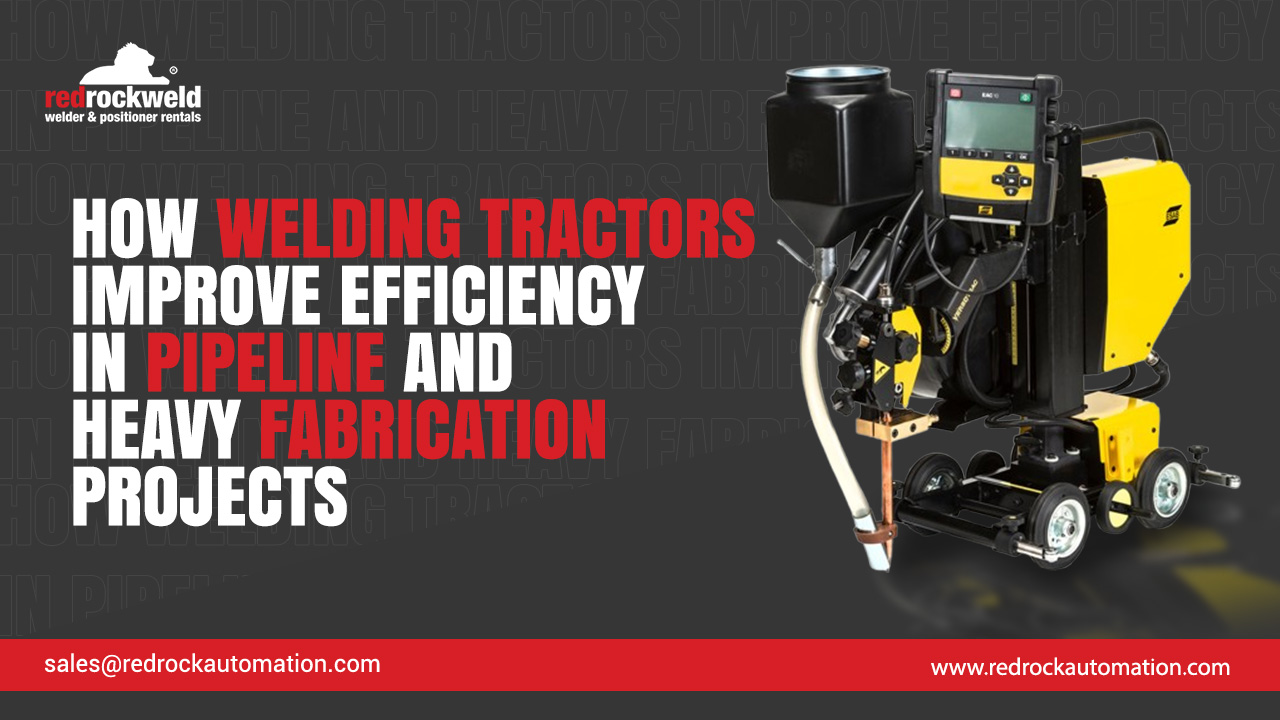
Welding tractors are especially relevant, as they guide the welding torch along the predetermined path, effectively doing away with the need for manual interference. They can be adapted to diverse welding techniques such as TIG, MIC and SAW welding.
In this blog, we will discuss how welding tractors improve efficiency in pipeline and heavy fabrication projects.
Benefits of Welding Tractors
- Enhanced Efficiency
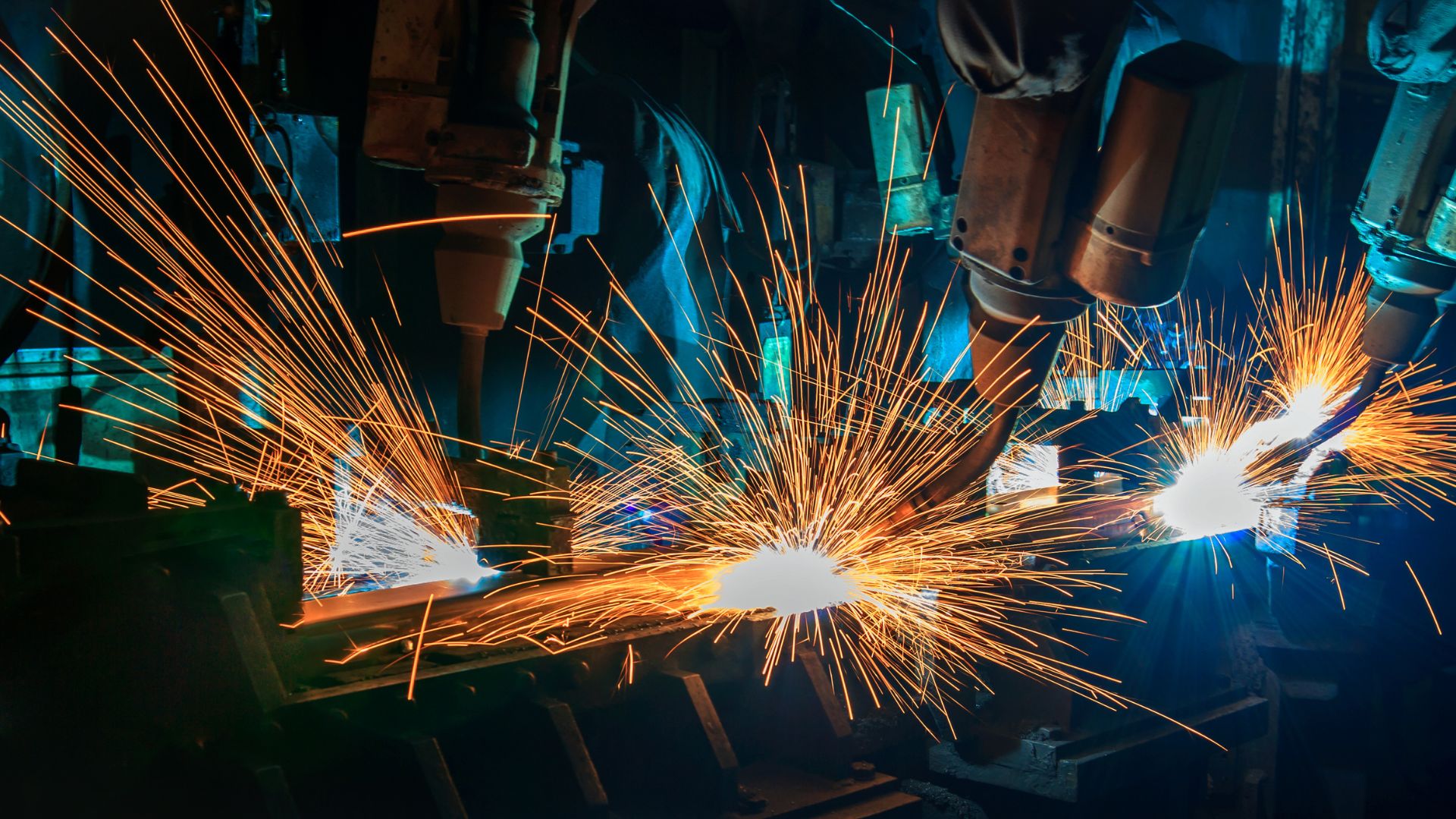
Welding tractors automate the movement of the welding torch, maintaining a constant speed and angle. This reduces material distortion, thereby doing away with the need for further reworks like grinding, gouging etc. This significantly reduces the labour cost and maximizes productivity.
- Maintain Consistent Quality
Welding tractors ensures better control over the welds. Once the setup is by specifying the parameters, it stays the same throughout the process, ensuring consistent weld throughout the process. Since the welding tractors use magnets, they grip onto the metal surfaces and pipes securely, making sure that the moments are precise regardless of the angle. The welder can set the tractor, specify the parameters and then leave it just as it is, while it renders clean welds.
- Portability
Portability is yet another important advantage of welding tractors. Most of the models are lightweight, and can be easily carried by the welders. This machine can be effectively used in situations where the welding process happens in multiple spots such as shipyards, construction sites, factory floors and other similar large areas. Once the operator is done welding in one spot, they can move the tractor to the next job site.
- Reduced Worker Fatigue
Manual welding is a physically demanding process. Welders often need to position and reposition the workpieces, ensure that the weld formation is consistent and repeat the same process for a prolonged period of time, which can lead to fatigue. Welding tractors help to automate these tasks.
Once they are set up , they move along the predetermined welding path and ensure consistent and high-quality welding. This way, the welders can focus on tasks that matter the most. This way, the welder is least exposed to the harmful fumes of the welding process.
Conclusion
Modern fabrication sectors need welding tractors to carry out heavy tractors . By automating the torch movement, they ensure that the welding process is done based on the defined settings, significantly reducing material distortion and the following reworks. They minimize operator fatigue and maximize productivity. At Redrock Automation, we offer the best welding automation and positioning solutions across the UK. No matter what the welding task, our welding equipment offers accurate and reliable performance.