Manual vs Self-Aligning Welding Rotators: Which One Should You Choose?
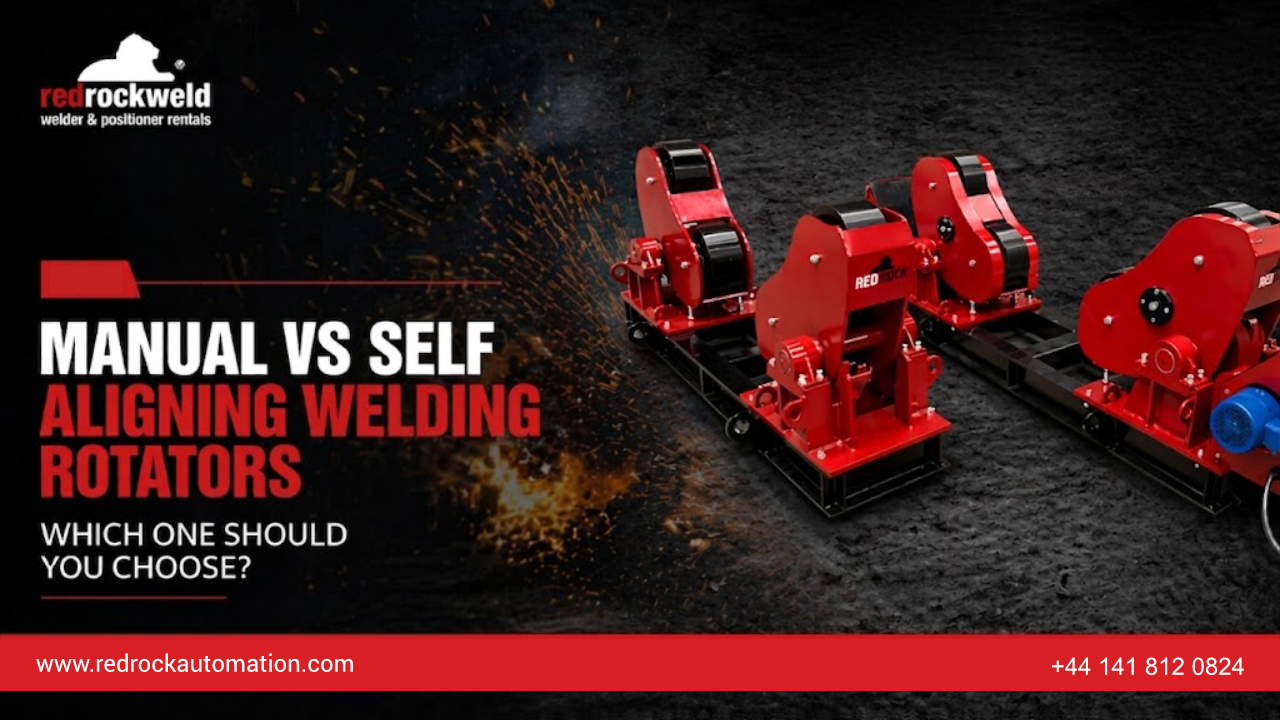
Selecting between manual and self-aligning welding rotators can be difficult because there are a lot of differences, advantages and disadvantages between them. But it mostly comes down to the variety of work you handle and your budget. This blog will explain the mechanics and benefits of both so that you can decide which one you would select.
What is a Welding Rotator?
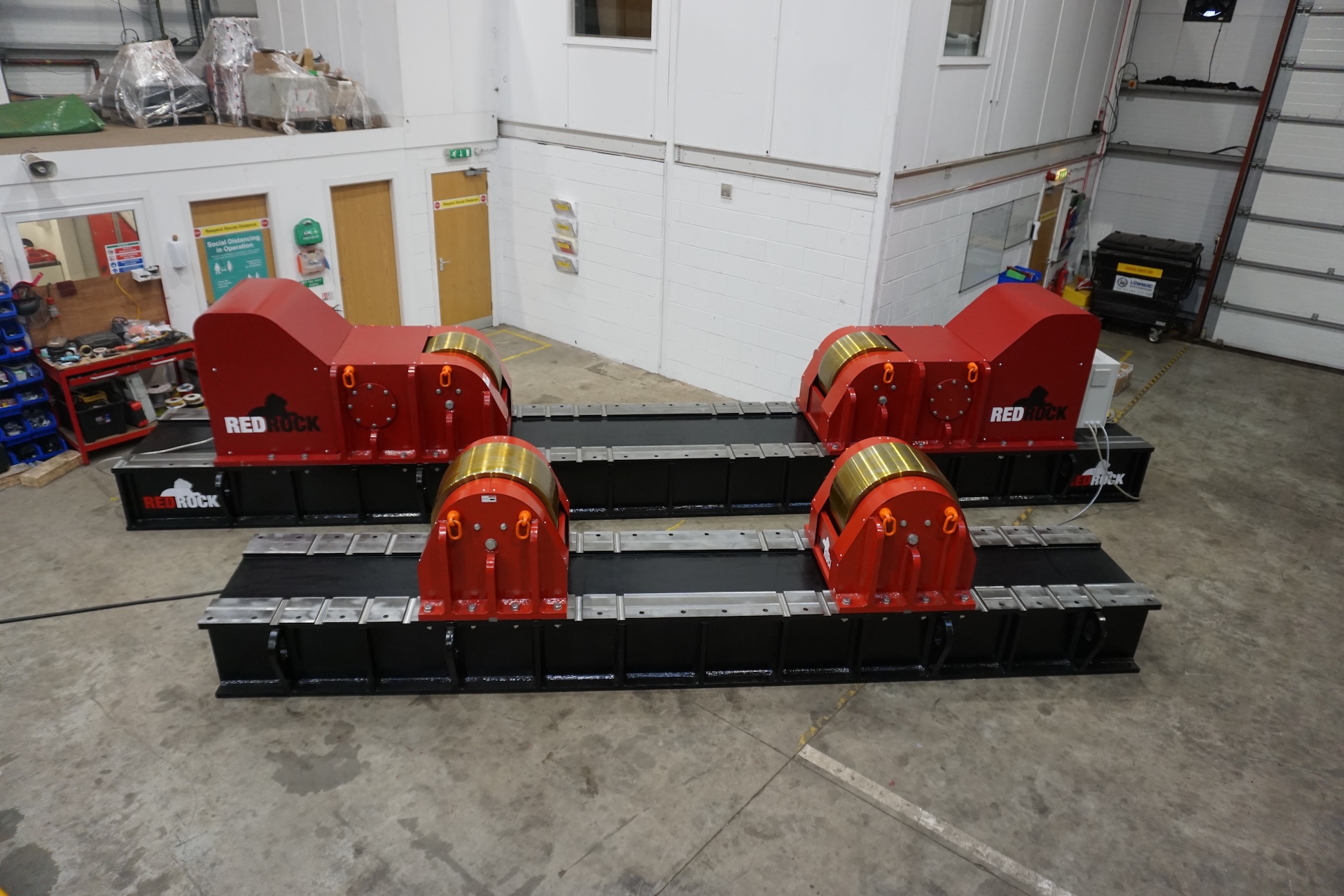
A welding rotator also known as turning roll is a machine used to rotate cylindrical objects like pipes, tanks, or pressure vessels while a welder works on them.This prevents the welder having to move around the piece or manually roll a heavy tank, the machine does the heavy lifting and gives a steady, controlled spin. This ensures the weld bead is consistent and the job gets done faster.
How Manual Rotators Work
Manual rotators are also known as conventional rotators, that have wheel brackets fixed in place. To fit different pipe diameters, you have to manually unbolt the rollers and slide them to a new position on the frame. It is a simple, rugged design that depends on physical adjustment to handle different sizes.
How Self-Aligning Rotators Work
Self-aligning models have a unique feature called swing arm or pivot design. When you lower a tank onto the rollers, the wheels automatically swing inward or outward to cradle the object perfectly. So there is no need for manual tools or measurements. The weight of the workpiece does the adjusting for you.
Factors to Consider for Your Workplace
Here are the most important points on how these machines function and where they are good in a real-world shop environment so that you can select the right one.
1. Speed of Setup and Wastage of time
The biggest difference you will notice daily is how long it takes to switch between jobs. With a self-aligning rotator, you can change a small pipe for a large tank in seconds because the rollers move on their own. Manual rotators need a technician to stop, find a wrench, and move the heavy roller housings.
2. Consistency of the Centerline
If you use self-aligning rotators, the center point of your pipe stays relatively in the same spot regardless of the diameter. This is a big benefit if you use a fixed welding head or a boom setup. Because the height of the weld doesn’t change much, you don’t have to keep adjusting your welding torch height. Manual rotators change the height of the workpiece significantly depending on how wide you set the rollers, needing more recalibration of your welding gear.
3. Surface Area and Weight Distribution
Self-aligning rotators have four wheels per power and idler unit instead of two. So the weight of your heavy tank is spread across more surface area. If you are working with thin walled stainless steel or soft materials, this extra support does not allow the tank from denting or deforming under its own weight. Manual rotators put more pressure on fewer points, which is good for thick carbon steel but it is risky for very thin vessels.
4. Easiness and Maintenance
Manual rotators are the best when it is about simplicity because they have fewer moving parts and no pivoting arms. There is very little that could go wrong. They are built like tanks and can survive in harsh, dusty environments with minimal care. Self aligning units have more pins, pivots, and joints that need regular greasing. If you want to buy it and forget the machine for a rough environment, the manual version is often safer.
5. Cost and Budget
Manual rotators are highly cheap to buy upfront because the engineering is simple,and that’s why the price is low but Self-aligning rotators are a piece of high end engineering, and you pay for that convenience. You have to decide if the time saved in labor will pay off the higher equipment cost within a reasonable timeframe. For many small shops, the manual version is the best way to start without a massive investment.
6. Grip and Traction
Self-aligning rotators give excellent traction because the four-wheel design ensures more rubber meets the metal. This is very helpful when rotating heavy loads that might have slight imbalances. The extra contact points prevent the vessel from slipping or jerking during rotation. Manual rotators give good grip too, but if the rollers aren’t set at the perfect width, you might experience slipping, which can ruin an accurate weld.
7. Diameter Range Flexibility
Manual rotators have a wider range for extremely large or extremely small diameters because you can physically move the rollers very far apart or very close together but Self-aligning rollers have a physical limit to how far their arms can swing. If you are working with a massive range of sizes from tiny tubes to giant silos then the manual one will give you more flexibility to handle the extremes that a self-aligning model cannot.
8. Worker Safety
Using a self aligning system is safer for the operator. There is no heavy lifting of roller beds or fumbling with large bolts. Everything happens automatically. In a manual setup, workers often have to lean over the frame or use pry bars to move components and this increases the risk of back strain or pinched fingers. If you want to keep your team happy and reduce the risk of workshop injuries, automation is the best.
9. Accuracy for Different Materials
If your shop works with expensive materials like aluminum or polished stainless steel, the self aligning model is better. Because it cradles the piece more gently and distributes the load, it reduces the chance of surface scratches or leaving any marks. Manual rollers can be a bit more dangerous on the surface of the metal if they are not aligned perfectly straight, This might lead to extra polishing work later.
10. Floor Space and Portability
Manual rotators have a slightly smaller footprint because they don’t need the extra room for swinging arms. If your shop is very cramped then even tiny space matters. Manual units are often easier to move around the shop with a forklift because their weight is concentrated in a more compact frame. Self aligning units are bulkier and usually stay in one dedicated welding bay for their entire lifespan.
Conclusion
Selecting between these two types of welding rotators will be based on the specific workflow. If you rotate the same size tanks all day and want a low-cost, durable workhorse, the manual rotator is a good choice but if you want to improve production speed and handle various pipe sizes without any issue, self-aligning rotators is a better choice. For more details on which rotator best suits your requirements, contact our team at Redrock Automation.