How Multi-Axis Welding Positioners Improve Weld Quality and Productivity
What Is a Multi-Axis Welding Positioner?
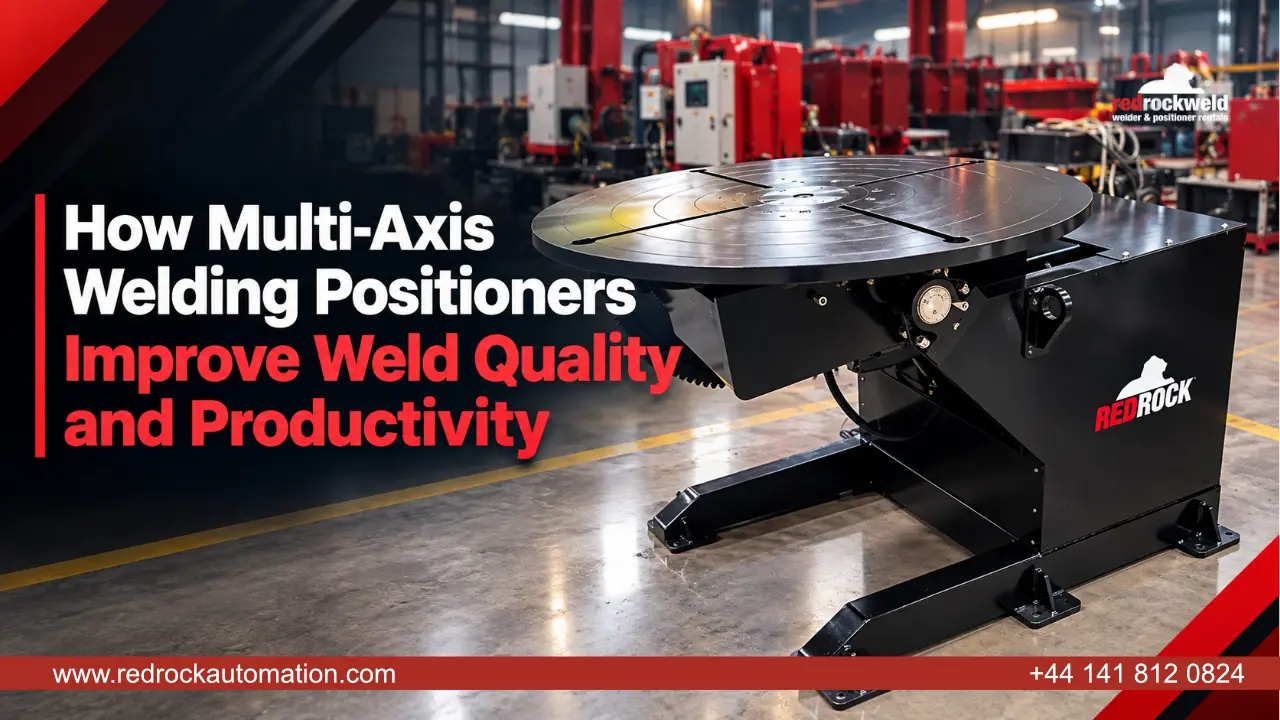
A multi-axis welding positioner is a modern welding positioning system that lets the workers access every angle of the workpiece without requiring a crane or manual repositioning. The single-axis table specializes in spinning in one direction, but a multi-axis positioner, such as a 2-axis welding positioner or 3-axis welding positioner, is able to carry the part through multiple planes at once. With this, even the weirdly shaped workpieces can be efficiently handled and welded.
How Multi-Axis Positioning Works
The standard rotary table thrives not because of its load capacity alone—but the welding positioner uses precise torque to hold different parts steady at different angles. A multi-axis welding positioner employs tilt, rotation, and sometimes height adjustment, which leads to a more efficient positioning of large and complex parts smooth, precise often through programmable and repeatable motion.
How Multi-Axis Positioners Improve Weld Quality
Better weld access
The multi-axis welding positioner can tilt and rotate parts into their place effortlessly, making joints extremely accessible that otherwise needed awkward angles or manual flipping.
Consistent welding angles
The torch angle rapidly shifts with manual adjustment, whereas the positioner holds it steady and consistent throughout the weld.
Improved weld penetration
When every weld is positioned at a flat and downhand angle, it helps achieve better weld penetration and weld quality.
Reduced repositioning
Positioners allow one continuous operation; this helps in reducing the repositioning and making the defect points less frequent.
Greater weld consistency
Welding positioners actively reduce fatigue, and this leads to better optimization and uniform results from one weld to the next and across different people and shifts. According to the math, there can be a 50-70% observable rate of reductions in the overall rate of weld defects.
How They Improve Welding Productivity
With multi-axis positioners, time-consuming activities such as setup time and part handling become integrated and can keep the welding sequence running continuously instead of relying on and spending time on manual repositioning. This radically alleviates worker fatigue, proven by studies that indicate roughly 40-60% improvement from the continuous welding operations.
Multi-Axis vs. Single-Axis Welding Positioners
The single-axis welding positioner is limited to one axis and rotation. This can limit access to certain joints and often requires cranes or manual repositioning for complex parts.
The multi-axis welding positioner, on the other hand, combines rotation and tilt, making any angle virtually 100% accessible for the workers.
Applications
- Pressure vessel fabrication
- Structural steel components
- Heavy equipment manufacturing
- Pipe or tank assembly
How to Choose the Right Multi-Axis Positioner
- Look for the weight capacity, including weight, size, and center of gravity
- The rotation degrees and rotation required by a typical part in your facility
- What kind of positioning precision does your application require?
- Comes down to controlling preferences as well, between manual, semi-automated, or fully programmable
- Fixture mounting options according to your requirement
Redrock Automation’s Multi-Axis Welding Positioner Solutions
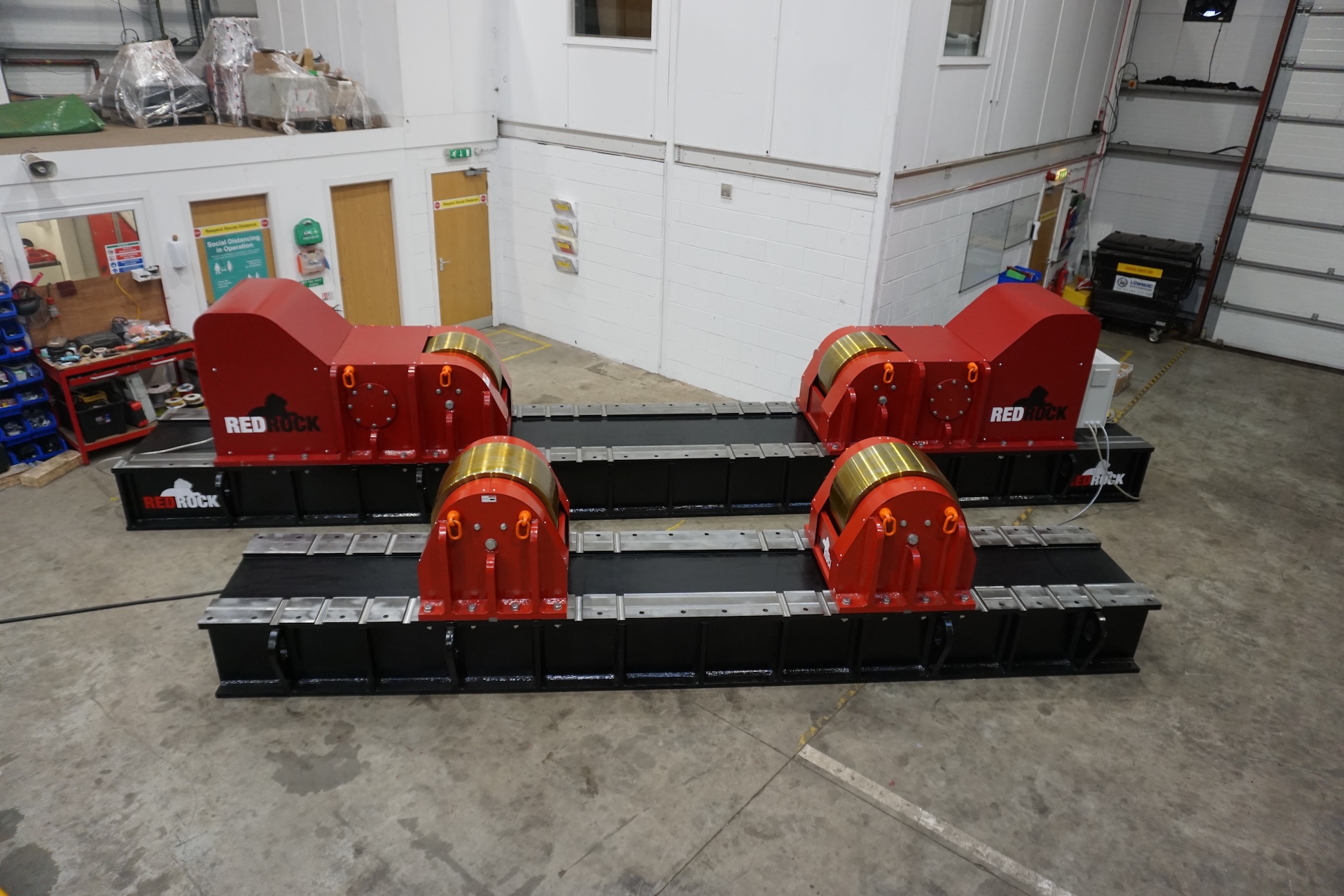
At Redrock, you can explore a variety of welding positioner options, from 2-axis to 3-axis hydraulic positioners, along with cradle-type positioners and varying load capacities from 250 kg up to 30,000 kg. All are made from steel, include different speed rotations, tilt capacity, and a 3-year warranty that offers you seamless operational continuity and tension-free operation.
Maybe you operate on more straightforward jobs; that would sensibly require 2-axis positioners, or if you require continuous heavy fabrication work, you migt require a more versatile positioning tool with both tilt and rotation combined—in this case, a 3-axis welding positioner.
Ready to upgrade your weld quality and productivity? Explore Redrock’s multi-axis welding positioners for sale or hire today.