Welding Positioner vs Welding Rotator: What is the Difference?
Picking the appropriate manufacturing equipment can dramatically increase the efficiency of your workshop. Many individuals often confuse welding positioners and welding rotators since they are both used to rotate parts. This guide will explain the particularities of these two tools and help you choose the best equipment for your future projects.
What is Welding Positioner vs Welding Rotator?
The first step in choosing any piece of equipment should be understanding its differences. Both welding positioners and rotators greatly simplify the process of working with heavy parts and rotating them.
Mechanical Movement Patterns
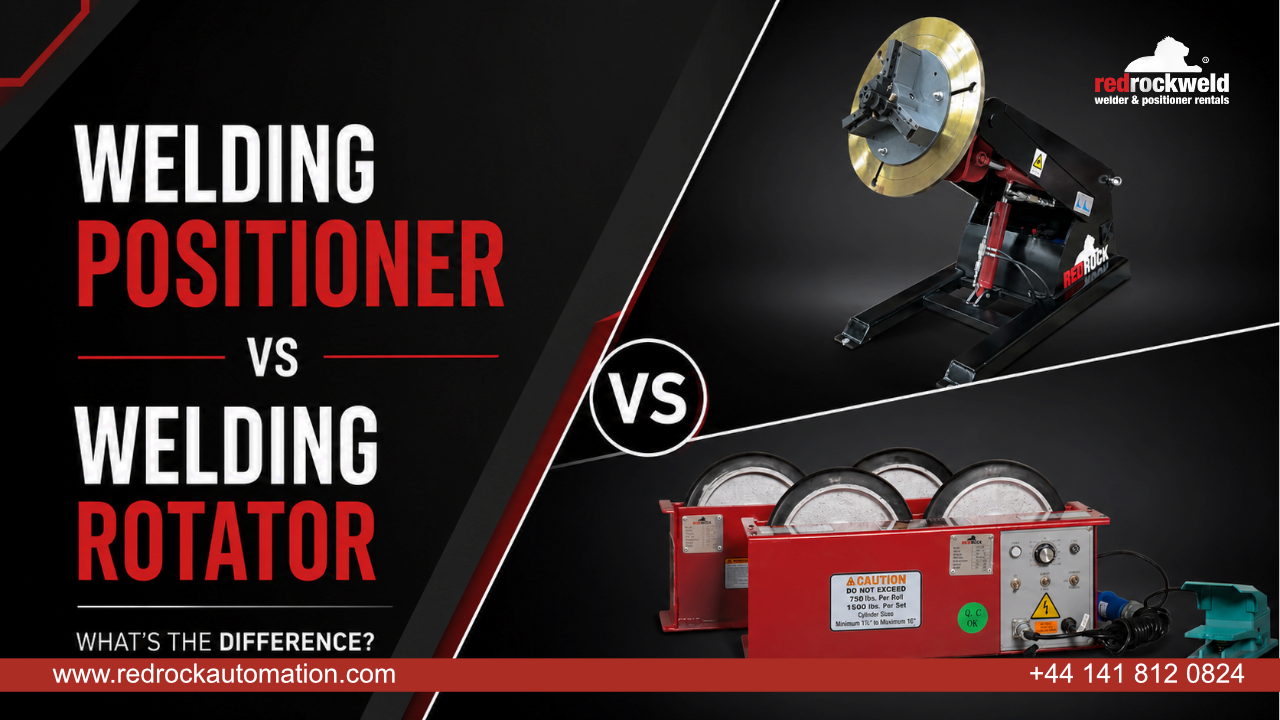
Positioners are able to tilt and rotate a workpiece in several axes to get a proper angle of operation. On the other hand, rotators can only rotate long cylindrical objects along the horizontal axis.
Workpiece Shape Suitability
It is easy to rotate any complicated shapes, such as pipes with bends, square frames, and structural assemblies with a positioner. Rotators, on the contrary, are made specifically for long cylinders including tanks, tubes, and pipes.
Weight Capacity Distribution
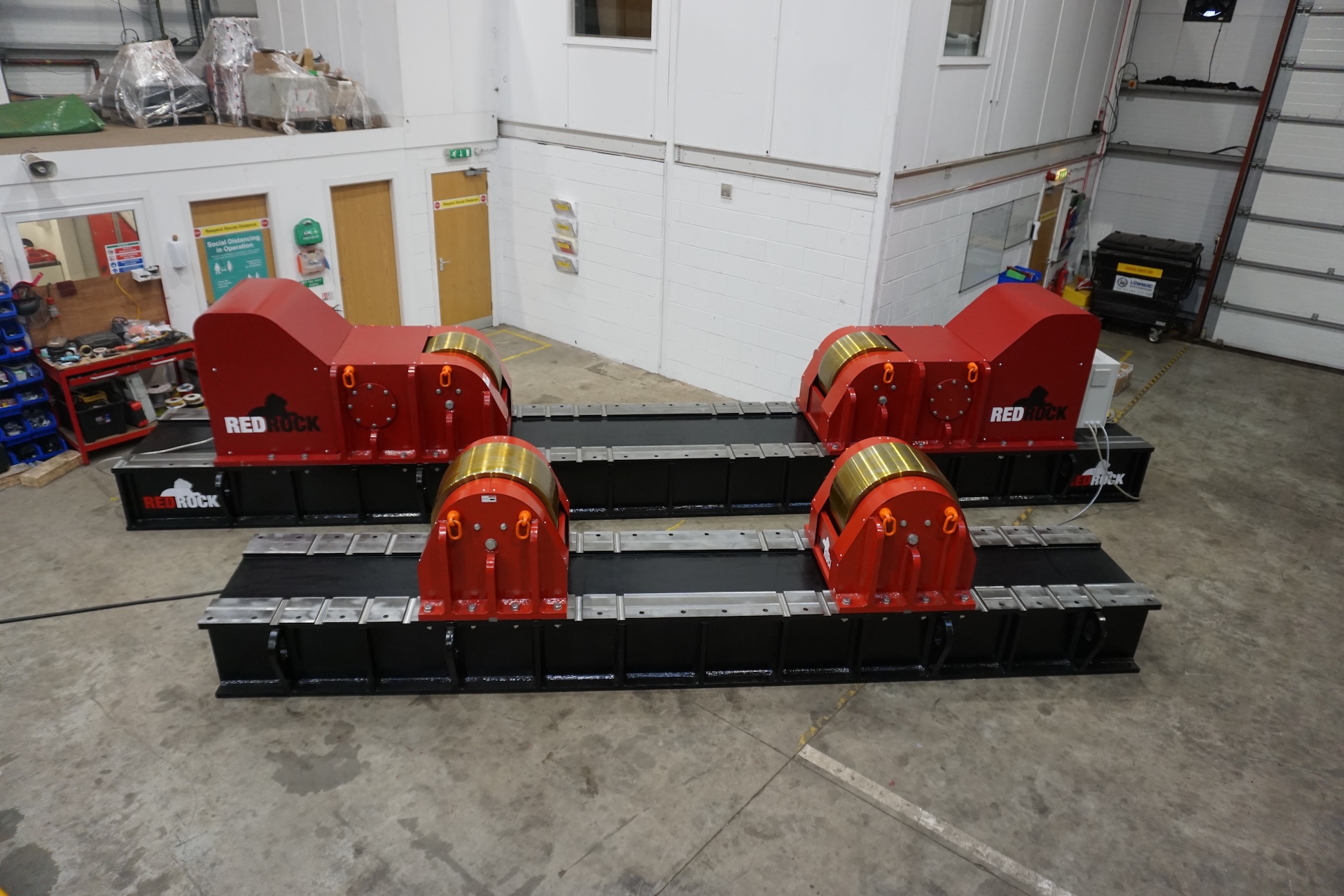
Rotators have an advantage in the weight distribution of massive items thanks to multiple wheels. At the same time, positioners hold the workpiece through a faceplate which does not allow them to carry the same load.
Uses, Benefits, & Overview
Increased Safety in the Workplace
Utilization of special industrial machines will greatly decrease the necessity to lift heavy metal parts manually and make risky crane maneuvers during regular activities in the workshop. Workers in industrial workshops no longer have to risk their own health or suffer from excessive physical strain to manually change the position of heavy steel parts. Automated mechanisms guarantee that metal parts will remain stable and secure during all processes.
High-Quality Welding Process
With the help of an automated process of rotating a metal part, welders can keep a downhand welding position for a prolonged period without any unexpected interruptions. This motion will create a smooth and consistent bead and exclude many defects caused by manual stops of the process which would weaken the metal joint. Thus, a good welder position will result in a strong metal joint that will easily pass radiography and ultrasonic tests.
Higher Speed of Operation
Commercial workshops will be able to complete their tasks much faster if welders do not have to manually change positions of parts. Continuous rotation will not interrupt daily operations and will avoid any unnecessary crane operations and bottlenecks in the workshop. Increased efficiency will allow your company to accept more orders and generate additional profit from each new client.
Minimization of Physical Strain
Professional welders can work in a comfortable and convenient position without constantly stooping over to reach parts and operate the torch. It will allow your employees to remain concentrated and accurate even during long and tiring working shifts. A healthy and well-rested workforce will be much more efficient than tired people that often suffer from repetitive strain injuries.
Versatility of Operation
Modern positioners have amazing flexibility due to their ability to tilt any shape of parts to any necessary angle with maximum precision. Such characteristics make them the perfect choice for complicated parts with numerous joints in different directions. Investment in such a flexible tool will allow your workshop to work with different custom shapes of parts of various industries.
Ability to Handle Heavy Cylinders
An industrial rotator will provide a perfect solution for rotation of large industrial tanks, pressure vessels, and long pipes. Robust and durable design will hold the massive load evenly and avoid any slipping or unexpected shift. Large-scale projects will become easy and fast with the help of rotators that are specifically designed to handle heavy cylinders.
More Effective Use of Consumables
With an ability to maintain the optimal downhand welding angle, the operator will be able to control the movement of a molten pool accurately. As a result, it will minimize the amount of spatter and reduce the use of expensive materials and consumables which are needed for welding. Consequently, it will reduce the cost of the manufacturing process in your workshop.
Integration with Advanced Technologies
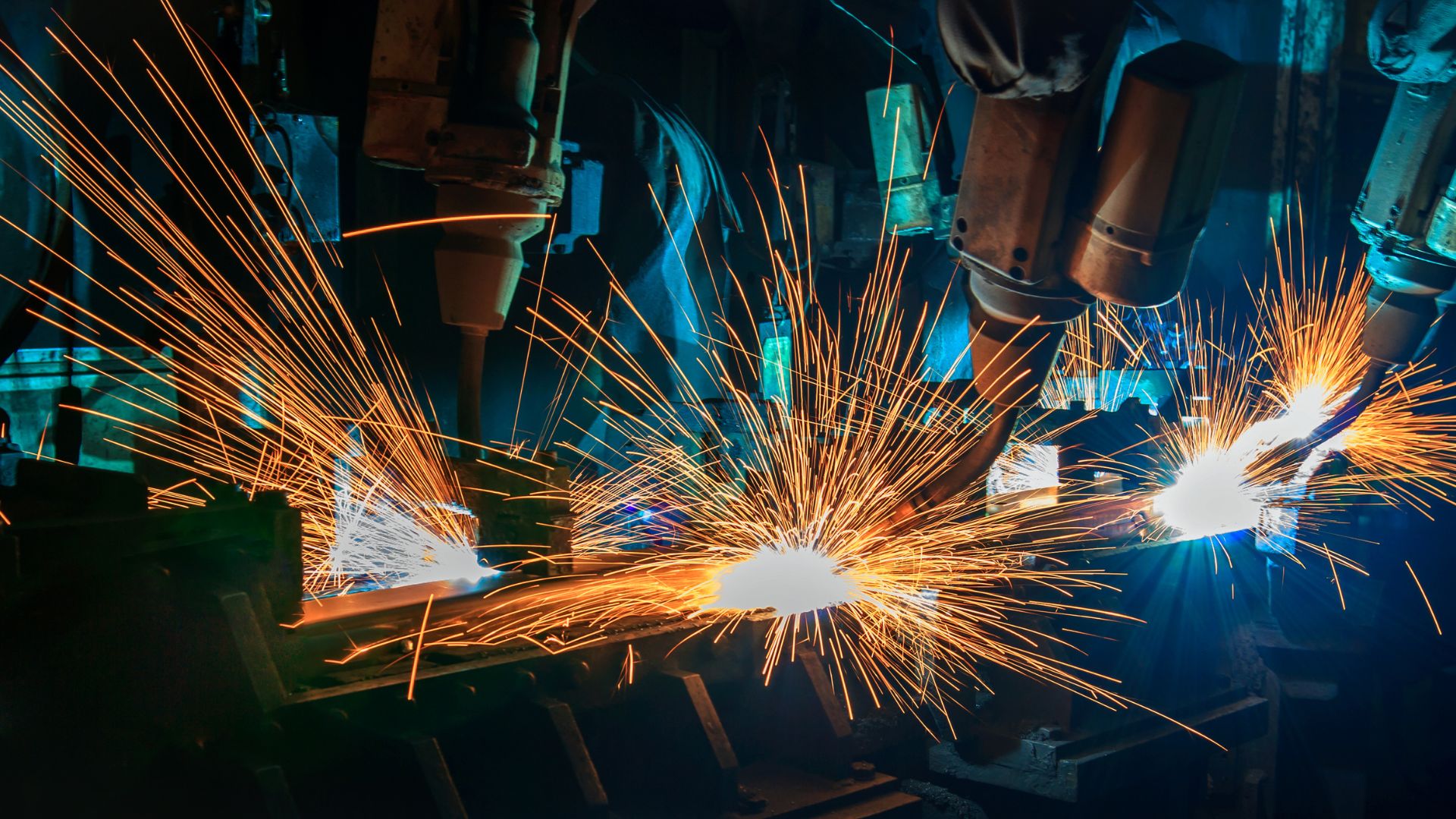
Both machines can easily be connected with robot manipulators for automatic welding to create automated welding systems. Automated welding allows completing identical welds in the exact positions infinitely with no mistakes and fatigue of a person. Transition to an automated manufacturing system will help your factory compete in the high-volume production market.
Minimization of Used Space
A compact welding positioner will save space in your workshop by storing metal parts in a vertical or inclined position. They will eliminate the necessity of taking space on the floor and creating unnecessary obstacles in the way of other employees. It will make your workshop look professional and improve the efficiency of the process in your workshop.
Long-Term Durability
Such industrial-grade machines are made of solid steel and able to withstand hard conditions of factories and continuous usage for many years. Regular maintenance will guarantee smooth functioning of internal gear and rolling mechanisms. Reliable equipment will help your company remain efficient, competitive, and profitable for many years.
Conclusion
The choice between welding positioner and rotator depends on the shape and weight of the workpiece. Positioners will help you rotate any complicated parts, while rotators are perfect for heavy cylindrical tanks. Proper equipment will significantly improve the efficiency and safety of your workshop and quality of welding. To purchase your welding positioners and rotators in this region, logon to Redrock Automation!